
Kesari is more than just a dessert—it’s a celebration of tradition, flavor, and culture on a plate. Extensively loved across South India, this bright, golden-hued sweet holds an important place in festive meals, temple offerings, and everyday indulgences alike. Kesari, made with simple ingredients such as semolina, ghee, sugar, and aromatic spices, is well-known for its rich flavour and soothing texture. In this blog, we examine the true meaning of kesari, its origins, and the reasons it is still a staple in eateries serving real Indian food.
What is Kesari?
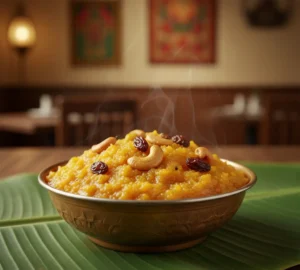
Kesari is a classic Indian sweet dish that is notably popular in South India. It’s made primarily from semolina (rava or sooji), ghee (clarified butter), sugar, water or milk, and flavorings like saffron or cardamom, which give it its trademark golden-orange color and rich aroma. Nuts like cashews and raisins are occasionally added for flavour and texture.
Kesari is usually made for festivals, special occasions, or religious rites, but it is also commonly found on restaurant menus as a dessert or breakfast item. It is visually appealing and soothing to eat due to its smooth, slightly gritty texture, sweet flavour, and vivid colour.
Ingredients in Kesari
Kesari is made using a few simple yet rich ingredients that give it its signature taste, color, and aroma. The core ingredients include:
- Semolina (Rava / Sooji): The main base of Kesari, providing its slightly grainy texture.
- Ghee (Clarified Butter): Adds richness, aroma, and a smooth mouthfeel.
- Sugar: Provides sweetness and contributes to the glossy finish.
- Water or Milk: Used to cook the semolina to a soft, smooth consistency.
- Saffron or Food Color: Gives Kesari its traditional golden-orange color.
- Cardamom Powder: Enhances flavor with a warm, aromatic note.
- Cashew Nuts: Roasted in ghee for crunch and richness.
- Raisins: Adds natural sweetness and texture.
Which One is More Popular as a Dessert Gulab Jamun or Kesari
When it comes to choosing between Gulab Jamun and Kesari, Gulab Jamun stands out as the more widely accepted dessert. It is a mainstay at weddings, festivals, celebrations, and restaurant menus, and it is adored throughout India and acknowledged worldwide. It is a favourite dessert for special occasions due to its decadent flavour and rich, syrup-soaked texture.
Kesari, on the other hand, enjoys enormous recognition in South India, where it is deeply rooted in tradition. Commonly served as part of breakfast menus, festive meals, and temple offerings, Kesari is valued for its simplicity, comforting taste, and cultural significance.
While both desserts are valued in their own way, Gulab Jamun has a wider national and international appeal, whereas Kesari remains a beloved regional classic, particularly in South Indian cuisine.
Final Thoughts
More than just a sweet dish, kesari is a staple of South Indian cuisine, cherished for its deep flavour, vivid colour, and cosy texture. This traditional dessert still has a special place on the plate and in people’s hearts, whether it’s for celebratory occasions or regular indulgence. If you’re looking to enjoy the true flavour of Kesari, you can try this delicious dessert at Swad Restaurant, where tradition meets quality. For those looking for the best South Indian restaurant in Lethbridge Canada, Swad provides a genuine dining experience that delivers the real flavours of South India to your table.