
Indian cuisine is renowned for its rich flavors, aromatic spices, and different cooking methods. But along with its culinary charm, many renowned Indian dishes are prepared with ingredients that are naturally high in saturated fat—such as ghee, butter, coconut, full-fat dairy, and deep-fried components. While these foods can be consumed in moderation, frequent use without mindful balance may contribute to health issues such as weight gain, high cholesterol, and heart disease.
In this blog, we’ll look at some of the most frequent Indian meals rich in saturated fat, explain why they have it, and offer healthier alternatives or cooking methods so you may enjoy your favorite flavors without compromising your health.
What is Saturated Fat, and Why is it Important to Monitor it in the Diet?
Butter, ghee, full-fat milk, beef, and some plant sources, including coconut and palm oil, are major sources of saturated fat, a kind of dietary fat. It is frequently used in rich, flavorful Indian cuisine since it typically remains solid at ambient temperature.
While saturated fat is not inherently “bad,” eating too much of it can elevate LDL (bad) cholesterol levels in the body. High LDL levels can raise the risk of heart disease, stroke, and other cardiovascular issues over time. As a result, health standards advocate eating saturated-fat-rich foods in moderation and balancing them with healthier fats such as nuts, seeds, olive oil, and seafood.
Monitoring your consumption of saturated fat doesn’t require you to give up your favorite meals; it just requires you to be aware of how often and how much you eat. With a balanced plate and wise substitutions, you may still enjoy Indian cuisine while improving your long-term health.
Are Vegetarian Indian Dishes High in Saturated Fat?
Surprisingly, vegetarian Indian cuisine can include considerable levels of saturated fat. This is mostly because many traditional recipes call for ingredients that are inherently high in saturated fat, such as ghee, butter, cream, full-fat milk, paneer, coconut milk, and deep-fried components.
Paneer butter masala, ghee-roasted veggies, coconut-based curries, malai kofta, and deep-fried snacks, for example, can have more saturated fat than anticipated, even when no meat is included.
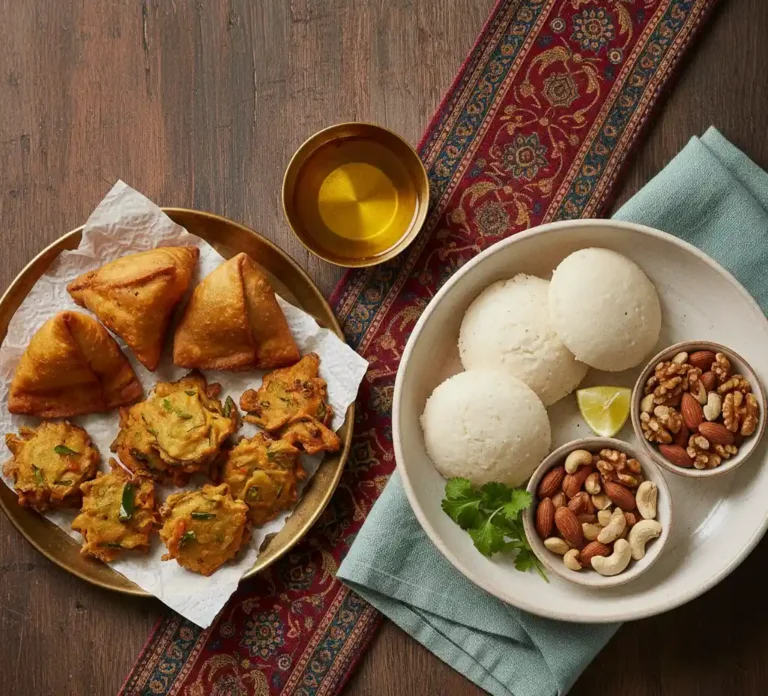
However, not all vegetarian recipes have high levels of saturated fat. India offers a wide variety of naturally healthful foods, including lentils, beans, steamed idlis, vegetable sabzis, poha, upma, and low-saturated-fat salads.
The secret is to strike a balance: watch how much ghee or cream is used, utilize lighter cooking techniques, and, whenever feasible, choose low-fat dairy or plant-based substitutes. In this manner, you can eat your favorite vegetarian meals without endangering your heart.
How Diverse is Indian Cuisine in Terms of Ingredients and Cooking Methods?
Indian cuisine is one of the world’s most diversified, influenced by centuries of regional customs, climatic variations, cultural influences, and local agricultural techniques. Each region of India has its own distinct flavors, ingredients, and cooking traditions, resulting in an extremely diverse cuisine.
- Regional Variety: While South Indian cuisine focuses on rice, lentils, coconut, and tangy flavors, North Indian recipes frequently incorporate wheat, dairy, ghee, and rich gravies. While the West features fiery curries, seaside seafood, and colorful street cuisine, the East favors fish, mustard oil, and delicate desserts.
- Wide Range of Ingredients: Spices like turmeric and cumin, cereals like rice and millets, legumes, vegetables, dairy, coconut, herbs, and oils are just a few of the many elements used in Indian cooking. Each region prioritizes components based on the climate and local produce.
- Multiple Cooking Techniques: The procedures vary greatly, ranging from slow-cooking, roasting, steaming, tempering, fermenting, grilling, sautéing, and deep-frying. A single element can undergo dozens of transformations across distinct states.
- Blend of Flavours: The whole range of flavors—sweet, salty, spicy, bitter, acidic, and savory—is embraced by Indian cuisine, which frequently combines several in a single dish to create a well-balanced profile.
What are the Common Sources of Saturated Fat in Indian Cooking?
Many popular Indian meals receive their rich flavor and creamy texture from ingredients that are naturally high in saturated fat. Although they can improve flavor, it’s useful to know where the majority of the saturated fat in Indian food comes from:
- Ghee (Clarified Butter): Ghee, a household essential, is used for tempering, frying, and imparting richness to curries, rotis, and sweet dishes. It is among the main sources of saturated fat.
- Butter and Cream: Heavy cream and butter are frequently used to create the smooth, velvety texture of butter-based gravies, creamy curries, and desserts.
- Full-Fat Dairy: Items like paneer, full-cream milk, curd made from whole milk, malai, and khoya are widely used in both savory and sweet dishes.
- Coconut & Coconut Milk: Coconut and coconut milk are wonderful, but they are heavy in saturated fat.
- Deep-Fried Foods: Snacks such as pakoras, samosas, puris, vadas, bhaturas, and chips absorb significant amounts of fat during frying—often using oils high in saturated or trans fats.
- Certain Cooking Oils: Oils like palm oil and vanaspati (hydrogenated vegetable fat) are sometimes used in commercial cooking and packaged foods. These are very high in saturated and trans fats.
- Traditional Indian Sweets: Mithai such as laddus, jalebi, gulab jamun, barfis, halwas, and festive treats often contain ghee, khoya, butter, and deep-fried components.
How Much Saturated Fat is Typically Found in Popular Indian Dishes Like Curry, Biryani, or Dosa?
Depending on how much ghee, butter, cream, coconut milk, paneer, and oil are used, Indian recipes can have quite different levels of saturated fat. Typical estimations are as follows:
Curry (Cream-Based or Ghee-Rich Curries)
Examples: Butter chicken, paneer butter masala
Typical saturated fat per serving (1 cup): 6–15 grams
- Cream and butter increase saturated fat significantly.
- Paneer-based curries also add to the total.
Biryani
Typical saturated fat per serving (1 plate):
- Chicken Biryani: 4–8 grams
- Mutton Biryani: 8–14 grams
- Vegetable/Paneer Biryani: 5–10 grams
- Ghee tempering and fried onions can raise the fat content.
Dosa
Typical saturated fat per dosa:
- Plain Dosa: 0.5–2 grams
- Masala Dosa: 2–4 grams
- Ghee Roast Dosa: 5–8 grams
The dosa itself is low in saturated fat; the ghee/oil used makes the difference.
Coconut-Based Curries (South Indian & Coastal)
Examples: Kerala chicken curry, vegetable stew, fish moilee
Typical saturated fat per serving: 8–16 grams
- Coconut milk and grated coconut are rich in saturated fat.
Deep-Fried Snacks
Examples: samosas, vadas, pakoras
- Typical saturated fat: 3–7 grams per piece
Depends on the oil used and how much is absorbed.
Paneer Dishes
Examples: palak paneer, paneer tikka masala
- Typical saturated fat per serving: 6–12 grams
- Paneer is high in saturated fat, especially full-fat paneer.
How Does the Method of Cooking (e.g., Deep-frying, Simmering) Affect the Saturated Fat Content of Indian Dishes?
The method in which an Indian meal is cooked can have a substantial impact on its saturated fat content—sometimes more than the ingredients themselves. The amount of saturated fat in the finished dish can be increased or controlled using several approaches.
Deep-Frying – Highest Impact on Saturated Fat
- Deep-frying dramatically increases the total fat content because foods absorb the oil they are cooked in.
- Snacks like samosas, pakoras, vadas, and puris can absorb 10–20% of the oil used.
- If ghee, vanaspati, or coconut oil is used, the saturated fat content increases even more.
Tempering with Ghee or Butter
- Indian tadka often uses ghee, butter, or oil.
- Even 1 tablespoon of ghee contains about 9 grams of saturated fat.
- Frequent use of ghee for tempering dals, sabzis, or biryanis adds significant saturated fat.
Simmering with Dairy (Cream, Malai, or Coconut Milk)
- Simmering dishes in rich dairy or coconut milk increases saturated fat.
- Cream-based gravies and coconut-rich stews are naturally higher in saturated fats.
- Longer simmering often exposes the dish to more added fat.
Roasting and Grilling – Lower Saturated Fat
- Roasting, baking, and grilling are healthier cooking methods.
- Paneer tikka, tandoori chicken, and roasted vegetables retain flavour without needing heavy fats.
- Excess fat often drips away during grilling, lowering total fat.
Sautéing with Minimal Oil
- Light sautéing with small amounts of oil or ghee adds flavour but keeps saturated fat moderate.
- Many Indian sabzis and stir-fry dishes fall into this category.
- Choosing vegetable oils instead of ghee helps reduce saturated fat.
Steaming and Boiling – Lowest Impact
- Steaming methods like making idlis, dhokla, or boiled lentils add almost no saturated fat.
- These dishes remain naturally light unless additional ghee or butter is added afterward.
Is Indian Fast Food High in Saturated Fat?
Yes, a lot of Indian fast food items are comparatively high in saturated fat, particularly those that are deep-fried or made with butter, ghee, or creamy toppings. Popular snacks such as samosas, pakoras, kachoris, bhaturas, and chaat variants sometimes absorb a large quantity of oil while frying, increasing total fat and saturated fat intake.
- Samosas & Pakoras: Deep-frying enables these foods to absorb oil—often 10-20% of their weight—resulting in a high saturated and trans fat content, depending on the oil used.
- Chaat Items: Many variations of chaat use fried papdis, puris, and sev, which add more saturated fat, even though they also contain fresh ingredients like potatoes, chickpeas, and yogurt.
- Street-Style Fast Food: Vendors may utilize oils like palm oil or vanaspati (hydrogenated fat) because they are affordable and stable at high temperatures—both of which are high in harmful fats.
While enjoying Indian fast food on occasion is totally OK, daily consumption may result in higher saturated fat intake than is suggested. Opting for baked variants, air-fried alternatives, or fresh chaat with less fried toppings might help make these items a little healthier.
Final Thoughts
Many traditional Indian recipes, particularly those cooked with ghee, cream, coconut milk, and deep-fried ingredients, can be heavy in saturated fat, even though Indian food is rich, varied, and unquestionably tasty. Being aware of which foods have the most saturated fat and limiting their consumption might allow you to enjoy your favorite flavors without jeopardizing your health.
Whether you enjoy your meals at home or out, opting for lighter options—such as dishes with less ghee, fresh low-fat dairy, or grilled and steamed preparations—allows you to savor the traditional flavors of Indian food without guilt. At Swad Restaurant, the best Indian restaurant in Lethbridge, we offer classic dishes that are carefully prepared, striking a balance between rich flavor and careful preparation. Visit us to enjoy a flavorful Indian meal.